Affordable and Efficient: Small Portable Batching Plants That Achieve 200m³ Daily
Let's talk about a construction paradox. For years, the rule was simple: high volume required massive, fixed plants with equally massive price tags. That paradigm is officially obsolete. The industry is witnessing a quiet revolution in concrete production, where small portable concrete plants for sale are shattering expectations by delivering serious output—up to 200 cubic meters daily—without the colossal footprint or capital outlay. This isn't about doing less with more; it's about a fundamental reimagining of what's possible with smart, targeted engineering. These compact powerhouses are democratizing high-volume production for mid-sized contractors, specialized projects, and growing enterprises, proving that you don't need an industrial goliath to achieve industrial-level results. We're entering an era where efficiency is no longer synonymous with enormity.
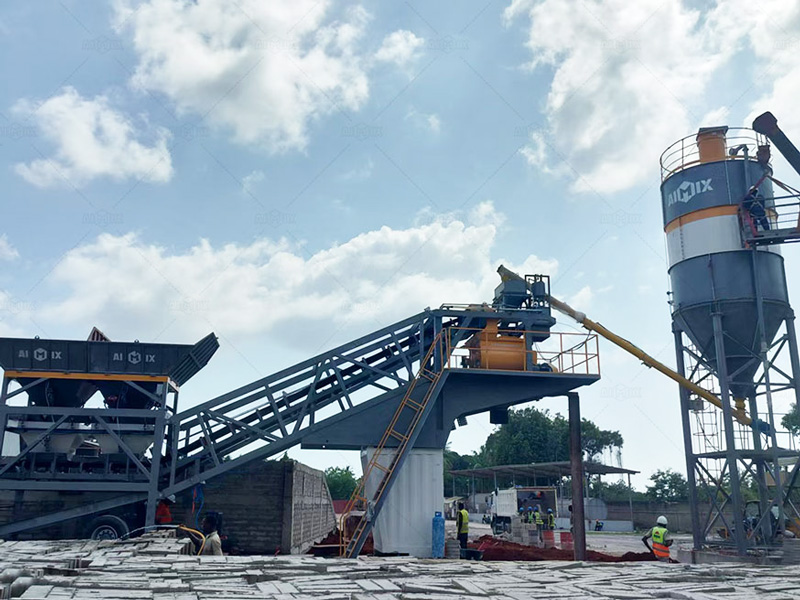
The New Economics of Scale: Right-Sizing Your Production
The traditional model of concrete supply forces a difficult choice: rely on unpredictable ready-mix deliveries or make a monumental investment in a stationary plant. Small portable plants obliterate this false dichotomy. Their affordability isn't just about a lower sticker price; it's about achieving an optimal economic scale. The financial barrier to entry plummets, freeing up capital for other critical business investments. More importantly, these plants attack the hidden costs that erode profitability. By producing on-site, you eliminate the premium costs of ready-mix, including transport fees and the profit margins of a third-party supplier. You gain absolute control over your mix design and production schedule, removing the risk of project delays due to late truck arrivals. This model transforms concrete from a volatile expense into a predictable, managed cost center. The ability to produce 200m³ per day means these small concrete plants are not just for niche applications; they can comfortably service housing developments, commercial buildings, and infrastructure projects, making them a financially astute cornerstone for a modern contracting business.
Design Intelligence: The Engineering Behind Compact Power
So, how do these units achieve such impressive output without the massive silos and conveyors of their larger counterparts? The answer lies in a philosophy of intelligent consolidation and rapid-cycle operation. Designers have meticulously engineered these plants to eliminate redundancies and spatial waste. The layout is a study in ergonomic flow, minimizing the distance materials travel from aggregate hoppers to the mixer. They often utilize highly efficient pan or planetary mixers that achieve a homogenous blend in a shorter time frame than traditional drum mixers. Furthermore, the control systems are a masterclass in operational streamlining. Semi or fully automated controls manage weighing, batching, and mixing with precision, reducing the potential for human error and accelerating the entire production cycle. This focus on cycle time is crucial—by shaving seconds off each batch, the plant can produce a significantly higher cumulative volume over a standard workday. It’s not about having a bigger engine; it’s about having a smarter, more refined system that wastes neither time nor motion.

Operational Agility: The Strategic Advantage of Mobility
Perhaps the most transformative feature of these plants is their mobility. A mobile concrete batching plant for sale is not just a production asset; it's a strategic tool that unlocks new business models. Its ability to be quickly transported and commissioned means your production capacity can follow your project pipeline. This is a game-changer for linear infrastructure projects like roads or pipelines, where the work site is constantly shifting. Instead of establishing a fixed plant and incurring ever-increasing transport costs to the progressing workface, you can relocate your entire production hub, keeping the point of production adjacent to the point of placement. This mobility also provides a powerful risk mitigation strategy. During seasonal slowdowns in one region, you can easily move the plant to a more active market. It allows contractors to bid on projects that were previously out of reach due to their remote location or lack of local batching facilities. This inherent agility future-proofs your investment, ensuring that your plant is an actively earning asset, not a stationary one tied to the fate of a single project or location. In today's dynamic construction landscape, the ability to move is the ability to grow.


