Why Corrosion Protection Matters for Island Construction Equipment in the Philippines: Self Loading Mixer
The Philippines archipelago presents construction equipment with one of the most corrosively aggressive operating environments on earth. More than 7,600 islands distributed across tropical latitudes, surrounded by warm seawater and exposed to prevailing maritime air masses carrying elevated chloride ion concentrations — this geography creates atmospheric corrosion conditions that compress the service life of unprotected steel equipment at rates that continental operators rarely encounter. For construction contractors working across the Philippine island groups — from Luzon's coastal development zones through the Visayas to Mindanao's expanding infrastructure program — corrosion is not a distant maintenance concern. It is an immediate, continuous, and economically significant operational reality.
Self loading concrete mixers are among the most practically valuable pieces of equipment available to Philippine island contractors. Their ability to batch, mix, and discharge concrete independently of fixed infrastructure makes them ideally suited to the logistical realities of island construction — where ready-mix supply chains are absent, where site access limits conventional equipment deployment, and where project economics demand on-site concrete production flexibility. But the same island environments that make self loading mixers in the Philippines operationally indispensable also subject them to corrosion mechanisms that inadequately protected machines cannot withstand across a commercially viable service life. Understanding why corrosion protection matters for these machines in the Philippine context — and what effective protection actually involves — is essential knowledge for any contractor making a self loading mixer investment decision in this market.
The Corrosion Mechanisms Unique to Philippine Island Environments
Marine atmospheric corrosion in the Philippines operates through mechanisms that differ in intensity and character from the general corrosion that humid tropical environments produce. The combination of elevated airborne chloride deposition from sea spray and maritime wind, persistently high relative humidity that maintains moisture films on metal surfaces, high ambient temperatures that accelerate electrochemical reaction rates, and the UV radiation intensity of tropical latitudes that degrades protective coating systems faster than temperate climate applications — these factors combine to create a corrosion environment that demands engineering responses specifically calibrated to marine tropical conditions rather than general construction equipment specifications.
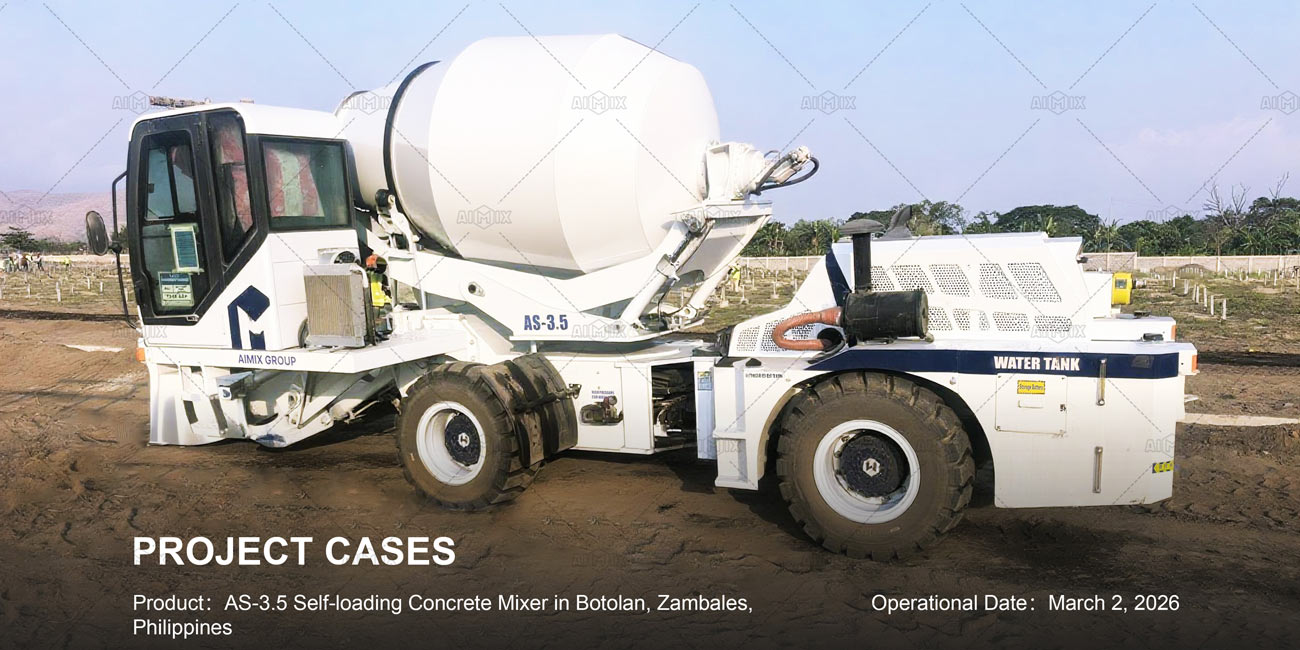
Chloride-Induced Electrochemical Corrosion on Structural Steel Components
Chloride ions are the primary corrosion accelerant in Philippine island environments. When airborne chloride particles — transported from seawater surfaces by wave action, wind, and spray — deposit on steel surfaces and combine with moisture, they form an electrolyte solution that drives the electrochemical oxidation reactions responsible for steel corrosion at rates far exceeding those produced by freshwater moisture alone. The chloride ion's particular aggression derives from its ability to penetrate and disrupt passive oxide films that naturally form on steel surfaces, removing the limited natural corrosion resistance that steel possesses and maintaining an actively corroding surface condition as long as chloride and moisture are present.
For self loading mixer structural components — the main chassis frame, loading bucket arm assembly, drum support structure, and hydraulic cylinder mounting points — chloride-accelerated corrosion reduces section thickness progressively, compromising the structural capacity of load-carrying members and eventually creating failure risk in components designed for the dynamic loads of mixing drum rotation, aggregate loading, and four-wheel drive travel across uneven terrain. The timeline from initial surface corrosion to structural compromise in inadequately protected steel exposed to Philippine marine atmosphere can be measured in months rather than the years that continental operators might expect.
Galvanic Corrosion at Dissimilar Metal Interfaces
Self loading mixers incorporate multiple locations where dissimilar metals contact each other — steel chassis components fastened with zinc-plated or stainless steel hardware, aluminum electrical component housings mounted on steel frames, copper hydraulic fittings connecting to steel pipe sections. In the electrolyte environment created by chloride-laden moisture on Philippine island sites, these dissimilar metal interfaces become galvanic cells where the less noble metal corrodes at an accelerated rate driven by the electrochemical potential difference between the two materials. Galvanic corrosion at fastener locations, hydraulic connection points, and electrical mounting interfaces can create structurally significant section loss and functional failure at these critical junctions within operational timeframes that contractors relying on standard equipment specifications would not anticipate.
Coating System Degradation Under Tropical UV and Humidity Cycling
Protective paint systems on construction equipment are the first line of defense against atmospheric corrosion — and in the Philippine island environment, they face degradation mechanisms that compress their service life relative to temperate climate applications. UV radiation intensity at Philippine tropical latitudes drives photochemical degradation of coating binder systems, progressively reducing coating adhesion, flexibility, and barrier integrity. Simultaneously, the daily humidity cycling between high daytime temperatures and cooler overnight conditions drives moisture absorption and desorption cycles through coating films that create osmotic blistering and adhesion loss at the coating-substrate interface.
Equipment protected by standard industrial paint systems — adequate for moderate climate construction applications — may show significant coating breakdown, rust bleed, and substrate corrosion initiation within 12 to 18 months of island deployment in the Philippines. Once coating integrity is compromised, the rate of underlying steel corrosion accelerates rapidly as the broken coating system traps moisture against the steel surface rather than excluding it. Maintaining corrosion protection across a commercially viable self loading mixer service life in Philippine island conditions requires coating systems specifically formulated for marine tropical exposure — not the standard paint specifications that serve equipment adequately in less aggressive environments.
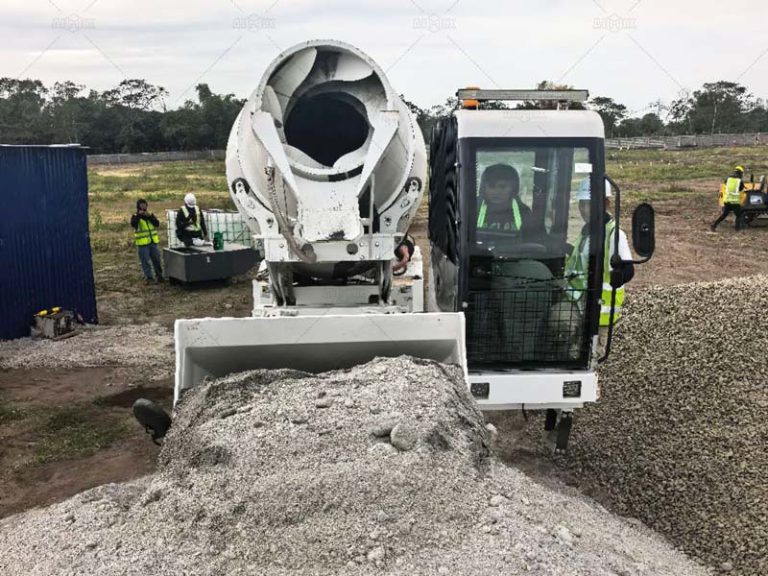
Engineering Specifications That Deliver Corrosion Resistance in Philippine Conditions
Effective corrosion protection for self loading mixers deployed in the Philippine island environment requires a systematic approach that addresses multiple protection layers simultaneously. No single measure — whether coating system, material selection, or maintenance protocol — provides adequate protection in isolation. The marine tropical environment is aggressive enough that each protection layer must complement the others, creating a defense-in-depth strategy that maintains equipment integrity across the full intended service life.
Marine-Grade Coating Systems and Surface Preparation Standards
The coating system specification for Philippine island self loading mixer deployment should incorporate marine-grade paint technology rather than standard industrial formulations. Zinc-rich epoxy primer applied to blast-cleaned steel surfaces — achieving the surface cleanliness and anchor profile that coating adhesion requires — provides sacrificial cathodic protection of the steel substrate in addition to barrier protection, maintaining corrosion protection even where coating damage creates exposed steel areas. Intermediate epoxy build coats and polyurethane topcoats rated for marine atmospheric exposure complete a system whose combined film thickness and chemical resistance is calibrated to Philippine environmental conditions rather than generic construction equipment standards.
Surface preparation quality is as important as coating specification. Coating systems applied over inadequately prepared surfaces — containing mill scale, rust, contamination, or insufficient anchor profile — fail prematurely regardless of their inherent quality, because adhesion at the coating-substrate interface is the fundamental requirement that all subsequent barrier and electrochemical protection depends on. Self loading mixers specified for Philippine island deployment should carry documentation of the surface preparation standard and coating system applied during manufacture, allowing the purchasing contractor to verify that protection specifications match the operational environment's demands.
Stainless Steel and Hot-Dip Galvanized Hardware Specification
External fasteners, brackets, hinges, and hardware components on self loading concrete mixers intended for Philippine marine environments should be specified in austenitic stainless steel or hot-dip galvanized steel rather than the zinc-plated mild steel hardware that suffices for continental deployment. Zinc plating thickness achievable by electroplating — typically 8 to 12 micrometers — provides inadequate corrosion life in marine atmospheric conditions where chloride-accelerated zinc dissolution rapidly exposes the underlying steel. Hot-dip galvanized coatings, providing 45 to 85 micrometers of zinc thickness, offer substantially longer protection life. Stainless steel hardware eliminates corrosion of the fastener itself while preventing the galvanic corrosion of adjacent steel that occurs when corroding fasteners create electrolyte pathways to structural members.
Maintenance Protocols That Sustain Corrosion Protection Across Service Life
Engineering protection into the machine at manufacture establishes the corrosion resistance baseline. Maintenance protocols sustained across the operating life determine whether that baseline is preserved or progressively eroded. In the Philippine island environment, corrosion maintenance cannot be deferred or treated as a low-priority activity between production seasons. The environmental aggression is continuous, and the rate at which unaddressed corrosion damage propagates means that maintenance deferrals create remediation requirements that quickly exceed the cost of the preventive work they replaced.
Regular Freshwater Washing and Coating Inspection Schedules
Regular freshwater washing removes chloride deposits from machine surfaces before they initiate or accelerate corrosion at coating damage sites. Weekly washing of the full machine exterior — including undercarriage components, hydraulic cylinder rods, and electrical enclosure surfaces — interrupts the chloride accumulation cycle that drives marine atmospheric corrosion and significantly extends the service interval of the coating system. Coating inspection following washing, identifying chips, scratches, and abrasion damage that expose bare steel, followed by prompt touch-up with compatible coating material, prevents the spot corrosion initiation that spreads beneath adjacent coating and creates the progressive delamination that eventually requires full surface preparation and recoating. These maintenance disciplines, consistently applied, are the operational foundation on which the manufacturer's corrosion protection engineering depends for its long-term effectiveness in Philippine island service conditions.


