When procurement teams and construction business owners evaluate concrete mixer pricing, the figures presented rarely exist in isolation. Behind every quoted price of self loading concrete mixer lies a complex architecture of regulatory compliance obligations, safety engineering investments, and certification processes that collectively determine what a manufacturer must spend before a single unit reaches the market. In the United Kingdom and across European-aligned markets, CE marking and UK Conformity Assessed — UKCA — marking frameworks impose structured technical requirements on concrete mixer manufacturers that carry genuine and measurable cost implications. Understanding how these compliance obligations translate into equipment pricing empowers buyers to evaluate quotations with far greater analytical precision.

The Regulatory Framework Governing Concrete Mixer Compliance
CE Marking and the Machinery Directive Requirements
CE marking, derived from the European Machinery Directive 2006/42/EC, establishes the foundational safety and performance requirements that concrete mixers — classified as machinery under the directive — must satisfy before entering European Economic Area markets. Compliance encompasses a structured series of obligations: hazard identification and risk assessment across all foreseeable operational scenarios, design modifications to eliminate or mitigate identified risks, integration of safeguarding systems including drum guards, emergency stop mechanisms, and anti-restart protections, and the compilation of a comprehensive technical file documenting design calculations, material specifications, and test results. For manufacturers, this process demands investment across engineering, testing, and documentation functions that materially elevate production costs relative to non-compliant alternatives. The CE mark visible on a compliant concrete mixer for sale UK is not a superficial administrative label — it represents the tangible output of a systematic safety engineering process whose costs are necessarily embedded within the equipment's market price.
UKCA Marking and Post-Brexit Compliance Divergence
Following the United Kingdom's departure from the European Union, a parallel conformity assessment regime — the UKCA mark — was introduced for products placed on the Great Britain market. While the technical requirements underpinning UKCA marking remain substantially aligned with CE marking standards, the administrative and testing processes are distinct, requiring manufacturers targeting both markets to maintain parallel compliance pathways. For concrete mixer manufacturers exporting to the United Kingdom, this bifurcation introduces duplicated conformity assessment expenditure — engaging UK-recognised testing bodies, maintaining separate technical documentation portfolios, and managing two distinct declaration of conformity processes. These additional administrative and certification costs are not absorbed silently by manufacturers; they are structured into pricing models and recovered across the units sold into each respective market. Buyers in the United Kingdom who encounter price premiums on UKCA-marked equipment relative to non-UK-market alternatives are observing precisely this compliance cost transmission in action.
Engineering Investments That Compliance Mandates
Structural Safety Features and Guard Engineering
Compliance with CE and UKCA frameworks does not merely require documentation — it mandates physical engineering investments that elevate manufacturing cost at the component and assembly level. Drum guarding systems, designed to prevent operator contact with rotating mixing elements, must satisfy specific strength, aperture dimension, and fixation requirements defined within harmonised European standards — principally EN 1417 for concrete mixers. These guards must withstand defined impact forces, resist corrosion across anticipated service environments, and be designed such that their removal triggers machine immobilisation through interlocked safety switching. Emergency stop systems must meet defined response time criteria and be positioned for immediate operator accessibility across all operational positions. Anti-restart protections must prevent inadvertent machine re-energisation following power interruption. Each of these engineering provisions requires design investment, component procurement, assembly integration, and functional verification — cumulative costs that distinguish a genuinely compliant machine from a superficially similar non-compliant unit at a lower price point.
Noise, Vibration, and Emission Testing Requirements
Beyond mechanical safeguarding, compliance frameworks require manufacturers to characterise and declare concrete mixer machine performance across noise emission, hand-arm vibration, and — for engine-powered variants — exhaust emission parameters. Noise emission declarations, governed by the Outdoor Noise Directive for relevant equipment categories, require standardised acoustic testing conducted under controlled conditions, generating declared sound power levels that inform site noise management planning. Hand-arm vibration assessments establish the vibration magnitudes transmitted to operators during representative operational tasks, informing employer risk assessments under Control of Noise at Work and Control of Vibration at Work regulations in the United Kingdom. Engine-powered mixers must satisfy Stage V emission standards for non-road mobile machinery, requiring engine specifications that incorporate advanced after-treatment technologies including diesel particulate filters and selective catalytic reduction systems. The testing, engine specification, and documentation costs associated with these parametric compliance obligations represent a substantial component of the price differential between fully compliant equipment and non-compliant alternatives that may appear superficially comparable.
How Compliance Costs Translate Into Market Pricing
Price Stratification Between Compliant and Non-Compliant Equipment
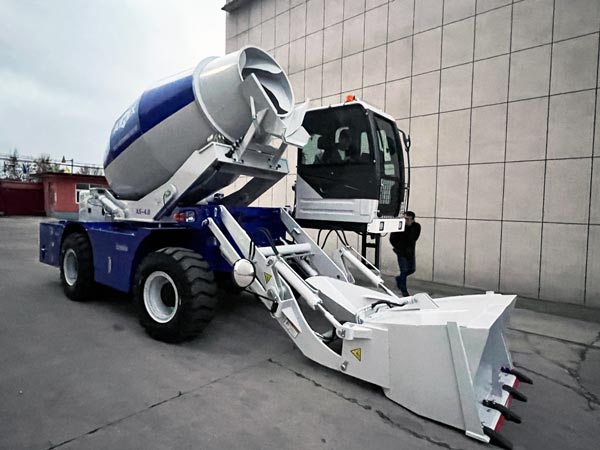
The concrete mixer market in the United Kingdom and CE-regulated territories exhibits clear price stratification between fully compliant equipment and non-compliant alternatives occasionally available through informal procurement channels. Fully compliant drum mixers from reputable European or compliance-invested Asian manufacturers typically carry price premiums of 20 to 45 percent over nominally equivalent non-compliant units. For self-loading concrete mixers — where compliance obligations encompass automotive safety systems, stability calculations, and operator cab protection requirements in addition to mixing-specific provisions — this differential can extend to 50 percent or beyond. Buyers who evaluate these price differentials without accounting for the compliance engineering content they represent risk drawing misleading conclusions about relative value. A non-compliant machine priced 30 percent below its compliant counterpart does not represent equivalent value at lower cost — it represents a different product category carrying unquantified liability exposure, potential insurance invalidation, and regulatory enforcement risk that the purchase price does not reflect. Informed procurement recognises compliance not as a price inflation mechanism but as the irreducible cost of engineering equipment that genuinely protects the operators, site personnel, and business owners who depend upon it.


