Return on Investment: How Long Until a Self Loading Mixer (Imported from China) Pays Off in Nigeria?
The calculus of capital equipment acquisition in the Nigerian construction sector demands a granular analysis of cash flow, operational throughput, and local market dynamics. The self-loading mixer, particularly those sourced from Chinese manufacturers, has emerged as a transformative asset, effectively combining the functions of a material loader, a concrete mixer, and a transport vehicle into a single, mobile unit. For the Nigerian contractor, the decision to import such machinery is not merely about operational convenience; it is a strategic financial maneuver predicated on a specific metric: the return on investment (ROI). Understanding the payback period requires dissecting the machine's ability to displace traditional manual labor, its impact on project completion rates, and the total cost of ownership, which includes maintenance, fuel, and the initial capital outlay. In an economy where project margins are tight and timelines are critical, the self loading mixer promises a path to accelerated profitability, but the velocity of that return is contingent upon utilization rates and operational strategy.
Capital Outlay and the Baseline of Traditional Costs
The initial financial hurdle is the procurement of the self-loading mixer itself. The cost of importing a new unit from China, including freight, insurance, and Nigerian customs clearance, represents a substantial investment, typically ranging from tens of thousands to over a hundred thousand US dollars depending on capacity (e.g., 1.5 cubic meters to 4.0 cubic meters). To evaluate the payback period, this figure must be juxtaposed against the prevailing costs of traditional concrete production in Nigeria. The baseline model involves renting a concrete mixer, hiring a separate loader or paying for labor to load aggregates, and employing a team of bricklayers and laborers to mix and transport the concrete, often in head-pans or wheelbarrows.

This traditional method is deceptive; it appears inexpensive on a daily basis but suffers from profound inefficiency and material waste. The daily cost of labor for loading and mixing, when annualized, forms a significant operating expense. Furthermore, the slow pace of manual production directly limits the number of projects a contractor can undertake. By eliminating the need for a separate wheel loader and drastically reducing the manual labor force required for batching, the self-loading concrete mixer in Nigeria allows a contractor to redirect these daily operational expenditures toward servicing the capital debt of the machine. The payback clock starts the moment the machine pours its first cubic meter and receives payment for that concrete, effectively monetizing the displacement of legacy cost structures.
Operational Throughput and Revenue Generation Velocity
The primary driver of a swift ROI is the sheer increase in production velocity. A self-loading mixer is not merely faster; it operates with a fundamentally different logic. It can traverse rough terrain to a remote site, load its own aggregates using its integrated bucket, accurately meter water and cement via its onboard computerized system, mix the materials during transit, and discharge a precise volume of concrete directly into formwork. This cycle, from arrival to pour, can be completed in under 20 minutes for a full load. In contrast, traditional methods might require an entire morning to produce the same volume. This time compression allows a contractor to complete multiple, smaller jobs in a single day, or to execute a large foundation pour in hours rather than days.
This enhanced throughput translates directly into revenue acceleration. If a contractor can double or triple the volume of concrete placed per week, the revenue stream multiplies accordingly. The machine's ability to produce concrete on-site also eliminates the "truck mixer waiting time" premium charged by commercial ready-mix suppliers, further improving margins. The ROI calculation here is a function of utilization; a machine sitting idle generates no return. Contractors who aggressively market the machine's speed and mobility, securing back-to-back bookings, will see their investment returned within a predictable window, often projected between 12 and 24 months, depending on the prevailing market rates for concrete per cubic meter in their specific region of Nigeria.
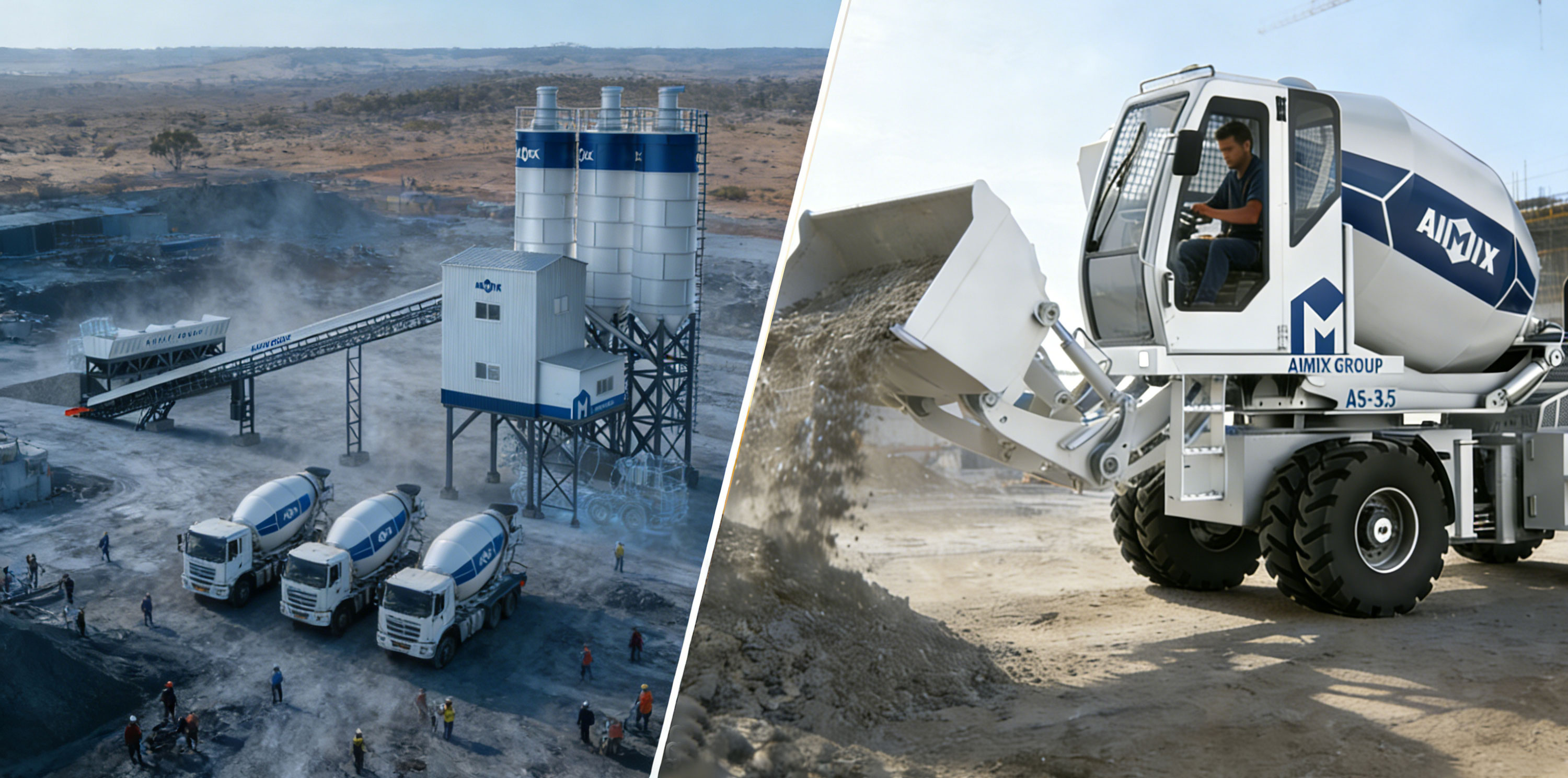
Depreciation, Residual Value, and Total Cost of Ownership
While revenue generation is the positive driver of ROI, the payback period is also influenced by the negative factors of operational cost and asset depreciation. The total cost of ownership for an imported Chinese machine includes diesel consumption, routine maintenance (oil, filters), and the eventual replacement of wear parts such as mini cement mixer blades and drum liners. These consumables must be factored into the weekly operating budget. Furthermore, the availability of spare parts in the Nigerian market is a critical consideration. Downtime spent waiting for a hydraulic pump or a control board from China directly extends the payback period, as the asset is not generating revenue while idle.
However, the residual value of the machine provides a counterbalance to depreciation. A well-maintained self-loading mixer retains significant value in the Nigerian used equipment market. Unlike manual labor, which has no resale value, the machine remains a tangible asset. Even after the initial investment is recovered, the machine continues to generate profit, and its eventual sale releases the remaining capital. The savvy operator understands that the payback period is not simply the point at which cumulative revenue equals the purchase price, but the point at which the machine has paid for itself while still retaining a substantial portion of its original value, ensuring that the operation remains liquid and positioned for further expansion.


