Why AIMIX’s Self-Loading Concrete Mixers Are a Must-Have in Ethiopia’s Growing Market
Ethiopia's construction sector is undergoing a period of sustained expansion, driven by urbanization, public infrastructure programs, and private development. This growth, however, is not uniformly supported by mature, nationwide logistics for construction materials. The reliable delivery of ready-mix concrete remains a significant bottleneck outside core urban corridors, often rendering projects in emerging areas economically challenging or logistically impossible. Within this specific market context, the value proposition of self-loading concrete mixer in Ethiopia shifts from a mere equipment option to a strategic enabler. AIMIX’s range of these machines presents a compelling solution, not through generic utility, but through a precise alignment with the operational and economic realities facing Ethiopian contractors. Their integration represents a move toward decentralized, self-sufficient construction methodology.
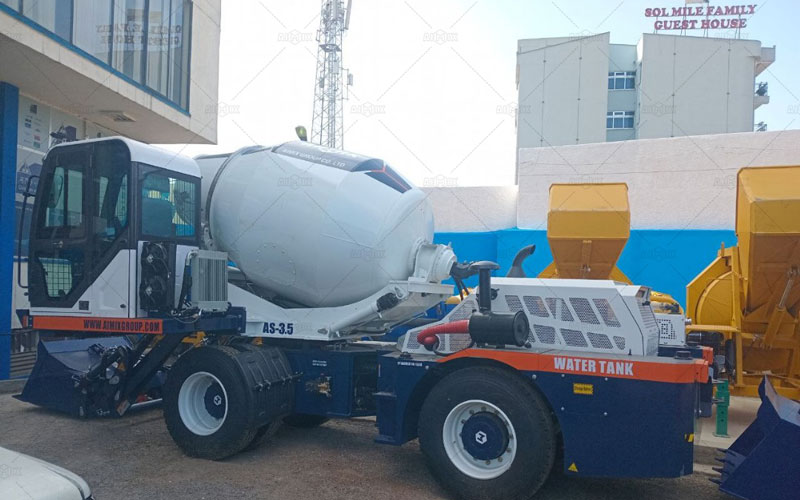
Aligned with National Infrastructure Imperatives: Decentralizing Construction Capability
Ethiopia’s development goals necessitate building activity beyond the confines of Addis Ababa and other major cities. Projects in secondary cities, along new transportation corridors, and in agricultural processing zones frequently encounter a fractured supply chain. Roads may be unpaved or impassable for standard ready-mix trucks during rainy seasons. The distance from centralized batching plants inflates costs and introduces scheduling unreliability. AIMIX’s self loading large concrete mixers directly mitigate this structural constraint. By functioning as independent, mobile production units, they decentralize concrete production capability. A contractor can establish a operational base at a project site using locally sourced aggregates and bagged cement. This operational model bypasses the need for a long, vulnerable logistics tail. It enables the execution of housing projects, small-scale irrigation infrastructure, school constructions, and warehouse builds in locations where traditional concrete delivery is either prohibitively expensive or physically unfeasible, thereby accelerating development exactly where it is strategically needed.
Engineered for Operational Sovereignty and Economic Efficiency
The core mechanical principle of the self-loading mixer—integrating a loading arm, mixing drum, water system, and sometimes a small conveying pump—creates a closed-loop workflow. This integration grants the contractor operational sovereignty. The production schedule is no longer dictated by the availability and arrival windows of third-party ready-mix suppliers. Concrete is produced on-demand, in the precise quantities required for the day’s tasks, minimizing waste from over-ordering or material setting in transit. This control over the most fundamental building material translates directly into enhanced project management predictability and the ability to meet tighter deadlines.

From an economic perspective, the machine facilitates a fundamental shift in cost structure. While the capital investment is tangible, it displaces a variable and often volatile cost: purchased ready-mix concrete. The true cost of delivered concrete in remote areas includes substantial transportation premiums and potential penalties for delays. The self loader concrete mixer converts this into a predictable cost model based on raw material input and machine operating expenses. For small to medium-volume projects, which constitute a vast portion of the market, this model frequently yields a lower total cost per cubic meter placed. It allows contractors to submit more competitive bids while protecting their profit margins from supply chain disruptions, creating a distinct commercial advantage.
Strategic Adaptation to Local Conditions: Durability and Support
Not all self-loading mixers are suited to the specific demands of the Ethiopian operating environment. Machines must demonstrate robustness. They require powertrains and hydraulic systems capable of enduring dust-laden air, variable fuel quality, and operation on uneven terrain. AIMIX’s design philosophy often emphasizes mechanical simplicity and component ruggedness over excessive electronic complexity, a sensible approach in contexts where specialized technical expertise may be scarce. Features like robust filtration systems, heavy-duty axles, and accessible service points are not minor details; they are critical determinants of machine lifespan and uptime in challenging conditions.
However, the physical machine is only one component of the value proposition. The presence of effective after-sales support is the critical multiplier. A machine’s utility collapses if a broken component leads to months of downtime waiting for an imported part. Therefore, AIMIX’s commitment—or that of its local partners—to maintaining a strategic inventory of wear parts and providing timely technical service within Ethiopia forms the bedrock of its must-have status. Localized training for operators and mechanics ensures the equipment is used and maintained correctly, maximizing its productive lifecycle. This holistic package of durable engineering and logistical support infrastructure transforms the machine from a purchased asset into a reliable partner for business growth. In a market poised for expansion but constrained by logistical realities, this combination provides Ethiopian builders with a tool to build more, build faster, and build farther afield.


