200 TPH Cost Analysis: Is a Wheeled Mobile Stone Crusher Actually Cheaper Than a Crawler Crusher?
The pervasive narrative in aggregate processing favors the wheeled mobile crusher on grounds of presumed thrift. This is a specious argument, one that collapses under rigorous financial and operational scrutiny, particularly at the consequential 200 tonnes-per-hour (TPH) scale. The purchase price is a seductive siren song, but it obscures a more complex economic reality. True cost analysis must venture beyond the invoice to interrogate site agility, production fidelity, operational longevity, and the relentless calculus of downtime. Asserting the inherent cheapness of a wheeled configuration is not merely an oversimplification; it is a potentially ruinous misapprehension for serious contractors.
The Central Economic Fallacy: Debunking the "Sticker Price" Mirage
It is indisputable that the initial capital outlay for a wheeled mobile crusher plant is typically lower than its track-mounted counterpart. To halt the analysis here, however, is an act of profound myopia. The sticker price is a mere entry fee. The relevant metric for a 200 TPH production asset—a significant industrial investment—is the Total Cost of Ownership (TCO) over its operational lifecycle. This encompasses not only acquisition but also transportation, setup and teardown costs, fuel efficiency, maintenance outlays, repair frequency, and ultimate residual value. Tracked units, with their integrated, self-propelled chassis and engineered drivetrains, initiate their value proposition from a different philosophical premise: optimized site performance and reduced ancillary expense. The financial comparison must be longitudinal, not a snapshot. To judge based solely on purchase price is to confuse being less expensive with actually being more economical.

Operational Agonistes: The Hidden Tax of Mobility and Setup
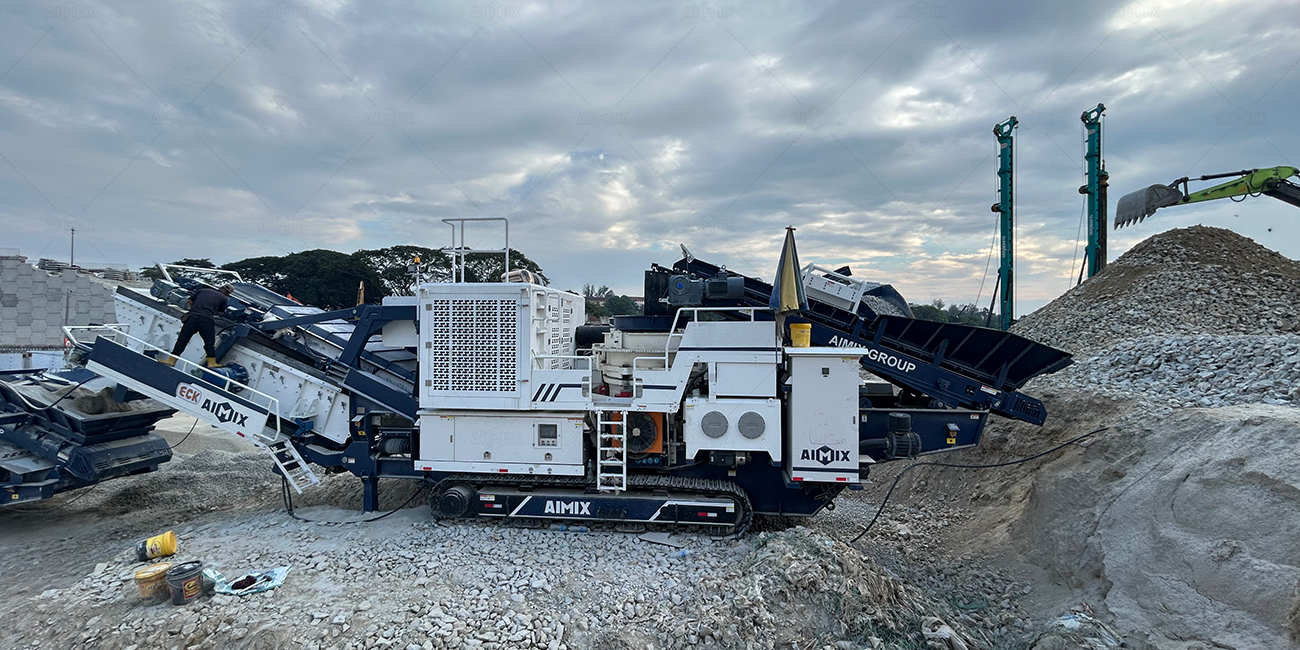
The operational narrative reveals the critical fissures in the wheeled crusher's value proposition. Consider mobility within the site. A tracked plant possesses autonomous, precise mobility with minimal ground pressure. It can traverse soft, uneven, or inclined terrain, positioning itself for optimal feed and minimizing dump truck cycle times. A wheeled unit often requires a lowboy trailer and prime mover for any significant repositioning, incurring cost, logistics, and dead time. This is a severe versatility deficit. Furthermore, setup and teardown are where the hidden tax is levied. Tracked crushers are designed for rapid deployment, often with hydraulic folding and setup systems that a single operator can manage in minutes. Wheeled configurations frequently require more manual labor, additional equipment like loaders for alignment, and considerably more time to achieve operational readiness. At 200 TPH, every minute of non-productive setup or repositioning represents a substantial forfeiture of potential revenue. This logistical friction is a perpetual drain on profitability.
Throughput and Production Fidelity: The 200 TPH Promise Under Scrutiny
A machine’s rated capacity is a theoretical maximum achieved under ideal conditions. The paramount question is its ability to sustain a high-quality 200 TPH output in the variable, punishing reality of a quarry or demolition site. Track crusher hold a decisive advantage here due to their inherent stability and integration. The lower center of gravity and optimized weight distribution of a tracked undercarriage provide a more stable crushing platform, leading to more consistent feed and superior end-product gradation. The direct, efficient diesel-electric or hydraulic drives common in tracked systems offer better torque response and fuel efficiency under high load. Wheeled crushers, particularly those relying on external prime movers for power, can suffer from power transmission inefficiencies and less stability on uneven ground, potentially compromising product consistency. Moreover, the wear on tires from sharp aggregate and site debris presents a recurring cost and downtime risk entirely absent in a tracked system. The tracked machine is engineered as a cohesive production unit; the wheeled machine is often an assemblage of crushing and towing components, a distinction that manifests in production fidelity.
The Verdict in Black and White: A Net Present Value Argument
When the factors of capital expenditure (CAPEX) and operational expenditure (OPEX) are synthesized into a rigorous Net Present Value (NPV) or lifecycle cost model, the track-mounted crusher frequently emerges as the superior financial asset for sustained 200 TPH production. Its higher initial cost is amortized by lower operational friction, higher availability, better fuel efficiency, and superior residual value. The argument for the wheeled mobile concrete crusher for sale is valid only within a narrowly defined set of parameters: predominantly hard, level sites requiring very infrequent relocation, and where the absolute minimization of initial payment is the overriding, non-negotiable constraint. For the vast majority of applications demanding reliable, high-volume output—where moving the plant to the material is routine, terrain is variable, and downtime is the ultimate enemy—the tracked crusher’s operational supremacy translates directly into a stronger, more defensible bottom line. The cheaper machine is not the one with the smaller price tag, but the one that delivers the required tonnage at the lowest ultimate cost per tonne. That crown belongs, more often than not, to the track type.


